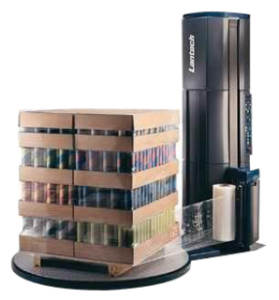
When thinner film is not the answer, but smarter performance is
Many companies want to reduce plastic usage in pallet wrapping.
The intention is clear.
The challenge is real.
Because in practice, reducing plastic often leads to one critical concern:
Will the load still be stable?
For years, the industry followed a simple rule:
thicker film equals stronger containment.
But that rule no longer holds.
The Real Problem: Plastic Reduction That Creates New Risks
Traditional stretch film achieves load stability mainly through thickness.
When plastic reduction is required, the most common response is downgauging.
From 23 mic to 20 mic.
From 20 mic to 17 mic.
The result?
- Marginal plastic savings
- Increased risk of load shifting
- More wrapping turns to compensate
- Unstable and inconsistent results
In many cases, plastic consumption does not truly decrease—it simply moves elsewhere in the process.
Why “Thinner Film” Alone Does Not Solve the Problem
Reducing thickness without changing performance logic creates a structural issue.
Conventional stretch film depends on:
- Material mass
- Multiple layers
- Operator technique
When thickness is reduced, containment force drops unless more film is applied.
This is why many sustainability initiatives fail at the operational level.
The problem is not thickness.
The problem is how load stability is generated.
A Different Solution: Pre-Stretched Performance by Design
Folded Pre-Stretch Film approaches the problem from a different angle.
Instead of relying on thickness, it relies on engineered pre-stretch performance created during manufacturing.
This means:
- The film is already stretched to an optimal ratio
- Tension and recovery force are controlled and consistent
- Load stability comes from performance, not volume
At 6 microns, the film delivers containment performance comparable to much thicker conventional films.
Not by being thinner.
But by being smarter.
What Real Plastic Reduction Looks Like
Based on equivalent pallet containment force and wrapping performance:
- Compared with 23 mic conventional stretch film
→ Up to 70% less plastic per pallet - Compared with 17 mic conventional stretch film
→ Up to 60% less plastic per pallet
This reduction is achieved without increasing wrap counts or compromising pallet integrity.
Why This Matters Beyond Packaging
Plastic reduction is not just a packaging issue.
It affects the entire supply chain.
Less Plastic at the Source
Using less material per pallet directly reduces virgin plastic consumption.
Lower Logistics Emissions
Lighter packaging weight reduces fuel usage across transportation stages.
Measurable ESG Impact
Material reduction is easy to calculate, track, and report—making sustainability claims credible and auditable.
Real Impact on Scope 3 Emissions
Packaging materials are a key contributor to Scope 3 carbon footprints.
Reducing them at scale delivers measurable results.

Stability First, Sustainability Follows
Sustainability solutions only work when they respect operational reality.
Folded Pre-Stretch Film is designed to maintain:
- Load stability during transport
- Consistent containment across pallets
- Reliable performance without extra handling
No trade-off between protection and reduction.
This is why plastic reduction through performance engineering is more effective than simple downgauging.
A Practical Approach to Smarter Packaging
At Sinyar Pack, packaging development starts with one question:
How do we solve real problems without creating new ones?
Folded Pre-Stretch Film reflects this approach—reducing material use while maintaining the standards logistics operations depend on.
Because true sustainability is not about using less at any cost.
It is about using exactly what is needed—and nothing more.
Final Thought
Plastic reduction should be measurable.
Load stability should be non-negotiable.
Performance should never be compromised.
Smarter stretch performance makes all three possible.
This article is provided by Sveda, an employee of Sinyar Pack.