A Practical ESG Transition Strategy for Packaging Decision-Makers
Across Europe and the Americas, more industrial packaging companies are gradually reallocating part of their stretch film volume toward PCR-recyclable and biodegradable solutions.
This shift is not happening because conventional stretch films stopped working.
It is happening because the market environment has changed.
Brand owners, procurement teams, and regulators are redefining what “qualified packaging” means. Sustainability is no longer optional positioning — it is becoming part of supplier evaluation and long-term risk management.
The question is no longer whether to transition, but when and how to do it strategically.
Why the Market Is Moving Now?
Several structural changes are driving this shift:
- Brand owners are pushing sustainability requirements down the supply chain
- Procurement teams are increasingly evaluated on environmental KPIs
- Recycled content and plastic reduction are becoming part of supplier qualification criteria
- Future compliance risks are easier to manage through early transition rather than reactive adjustment
Companies that start early retain control over the process.
Companies that wait often move under pressure.

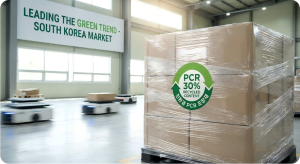
PCR Recyclable Stretch Film
Direct ESG and Procurement Value
Introducing PCR (Post-Consumer Recycled) content into stretch film is not a marketing statement — it is a measurable operational action.
What PCR Integration Achieves
Using PCR stretch film helps your organization:
- Demonstrate reduced reliance on virgin plastic
- Support Scope 3 emission discussions with documented material change
- Strengthen sustainability reporting with traceable recycled content
- Align with global recycled material frameworks, including GRS-related standards
For procurement teams, PCR content creates quantifiable environmental value that can be documented and audited.
For brand owners, it signals proactive material transition rather than compliance-driven reaction.
Many companies begin by allocating a controlled percentage of volume to PCR film, validating performance, and gradually scaling adoption.
This phased approach reduces operational risk while building ESG positioning.
Biodegradable Stretch Film
A Strategic Buffer Against Future Regulatory Risk
Environmental policies related to plastic waste are tightening globally.
While timelines differ by region, the direction is clear.
Introducing biodegradable stretch film now allows your company to:
- Prepare for stricter future environmental expectations
- Reduce long-term environmental liability concerns
- Offer customers a forward-looking packaging solution before it becomes mandatory
Biodegradable film does not replace all conventional applications overnight. Instead, it provides a strategic flexibility layer — especially in markets where environmental regulation is evolving rapidly.
Early adopters often gain reputational advantage and customer recognition before sustainability becomes a compulsory requirement.

Why Timing Matters More Than Volume
Most of our partners do not convert 100% of their stretch film usage at once.
Instead, they:
- Introduce PCR or biodegradable film to a selected product line
- Validate mechanical performance and load containment
- Monitor customer feedback and reporting impact
- Gradually expand adoption
The key differentiator is not speed — it is timing.
Companies that move earlier position themselves as sustainability leaders.
Companies that move later often transition under regulatory or customer pressure.
How Sinyar Supports Practical Transition
At Sinyar Pack, the objective is not to promote replacement for the sake of marketing.
It is to support structured, measurable material transition.
We work with partners to:
- Evaluate current film specifications and performance requirements
- Identify suitable PCR or biodegradable integration ratios
- Provide documented material data for ESG reporting
- Support trial validation before scaling
This approach reduces uncertainty while aligning operational packaging needs with sustainability goals.
Is It the Right Time for Your Team to Start?
If your organization is already facing:
- Sustainability reporting pressure
- Brand owner environmental audits
- Procurement KPI restructuring
- Questions about recycled content or plastic reduction
Then early, controlled transition may provide both strategic and reputational advantage.
Sustainability transition is easier when it is planned — not imposed.
his article is provided by Tina, an employee of Sinyar Pack.