How to maximize the value of handy stretch film and machine stretch film?
Many users have experienced this situation:
You finish wrapping one pallet,
and when you look at the roll, there is only a small amount of film left.
You start wondering:
“Did I do something wrong?”
In most cases, the answer is yes—but not because of the film quality.
The real issue lies in how the stretch film is being used.
This article explains why stretch film is often wasted during pallet wrapping and how to maximize the value of both handy stretch film and machine stretch film through simple but effective adjustments.
The Common Expectation vs. Reality
Under normal conditions:
- One 3 kg roll of handy stretch film can wrap around 3 pallets
- One 15 kg roll of machine stretch film can wrap around 14 pallets
If your actual usage is far from this benchmark, unnecessary film loss is likely happening during the wrapping process.
The good news is that this loss can often be reduced without changing the film—only the method.
How to Maximize the Value of Hand Stretch Film?
Hand wrapping seems simple, but small mistakes can lead to significant material waste.
Pay Attention to the Wrapping Angle
When wrapping a pallet by hand, the angle of the film matters more than many people realize.
If the film is tilted too much:
- The effective coverage per rotation decreases
- More film is consumed to achieve the same containment
- Tension becomes uneven across the load
Keeping a stable and controlled wrapping angle helps ensure that every meter of film contributes to load stability rather than being wasted.
Choose the Right Thickness for Cornered Products
Not all loads are the same.
If the products on the pallet have sharp edges or hard corners:
- Thin handy stretch film is more likely to tear
- Re-wrapping becomes necessary
- Overall film consumption increases
In such cases, choosing handy stretch film of 25 microns or thicker can actually reduce total film usage by preventing breakage and repeated wrapping.
Using a film that matches the load condition is one of the simplest ways to maximize efficiency.
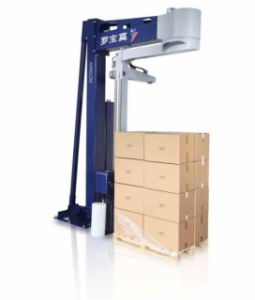
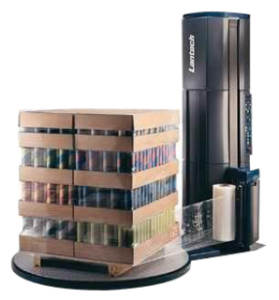
How to Maximize the Value of Machine Stretch Film?
Machine stretch film offers higher efficiency, but only when the film and the machine work in harmony.

Match the Film Stretch Rate with the Machine Capability
One of the most common mistakes is using a machine stretch film whose stretch rate does not match the pallet wrapping machine.
If the stretch rate is mismatched:
- The film may be overstretched and lose holding force
- Or underutilized, resulting in unnecessary material use
Selecting machine stretch film with a stretch performance compatible with your equipment is essential for stable wrapping and material optimization.
Set the Pre-Stretch Parameters Correctly
Even the right film can perform poorly if the machine settings are incorrect.
When adjusting the pallet wrapping machine, special attention should be paid to:
- Pre-stretch ratio
- Tension control
- Consistency across wrapping cycles
Incorrect pre-stretch settings can lead to:
- Over-stretching, causing weak containment
- Insufficient tension, leading to loose wrapping
- Increased film consumption without added stability
Proper calibration ensures that the film works at its designed performance level.
Efficiency Is Not About Using Less Film—It’s About Using Film Correctly
Many users try to reduce costs by simply choosing thinner film.
This often leads to the opposite result.
True efficiency comes from:
- Correct wrapping technique
- Proper film selection
- Accurate machine settings
When these elements are aligned, film usage becomes predictable, stable, and cost-effective.
A Practical Packaging Philosophy from Sinyar
At Sinyar, the goal is not just to sell stretch film, but to help customers maximize profit through correct usage.
Reducing waste, improving wrapping efficiency, and ensuring load stability all contribute to lower packaging costs and smoother logistics operations.
Sometimes, small adjustments create the biggest improvements.
Have You Encountered Similar Problems?
Stretch film performance depends on many real-world factors.
If you have experienced issues such as:
- Unexpected film consumption
- Poor pallet stability
- Frequent film breakage
These challenges are worth discussing.
This article is provided by Tina, an employee of Sinyar Pack.