For years, when customers asked about sustainable stretch film, the conversation was relatively simple:
- Can you add some recycled content?
- Do you have PCR certification?
- Will it be cheaper than virgin material?
Today, the discussion has changed dramatically.
Recent developments across North America and Europe show that PCR stretch film is no longer just an environmental marketing claim. It is entering a far more demanding phase where recycled content, performance, regulatory compliance, and supply-chain traceability must work together.
Across the industry, several trends are emerging:
- 30% PCR hand stretch film is being produced in thinner gauges.
- 30% PCR blown stretch film is expected to maintain load retention and puncture resistance.
- 35% household-sourced PCR is being used in stretch hood applications.
- 85% PCR rLLDPE is being introduced for stretch film, agricultural film, industrial film, and other non-food packaging applications.
- Regulations such as the EU Packaging and Packaging Waste Regulation (PPWR) and Extended Producer Responsibility (EPR) programs in North America are pushing recycled-content requirements further upstream in purchasing decisions.
As a result, customers are no longer asking only whether a film contains PCR. They increasingly want to know:
- Where does the recycled content come from?
- Can the film maintain consistent stretch performance?
- Will it reduce pallet stability?
- Is it suitable for machine wrapping?
- Are certifications and compliance documents available?
- Can it perform reliably during transportation and storage?
For film manufacturers, the competitive challenge has shifted from simply adding recycled material to maintaining consistent performance despite the variability of recycled feedstock.
What Are Global Industry Cases Telling Us?
1. Thirty Percent PCR Has Become the New Mainstream
Several leading packaging companies have already positioned 30% PCR as a standard offering rather than a niche sustainability product.
Berry Global’s Bontite Sustane Stretch Film combines 30% certified PCR content with key performance characteristics such as load containment, puncture resistance, and pallet stability.
Similarly, Amcor’s Earth Sense Pro Recycled Content Stretch Hand Film contains 30% PCR while achieving a lightweight 28-gauge structure. The product also received recognition from the Flexible Packaging Association for its sustainability achievements.
These examples demonstrate an important shift in market messaging.
Global suppliers are not selling PCR stretch film solely as an environmentally friendly alternative. Instead, they are combining sustainability with performance, downgauging, transportation security, and operational efficiency.
For customers, the real concern is not the percentage of recycled content. The key question is whether pallet loads remain stable, machines run efficiently, and transportation damage rates stay low after PCR is introduced.
2. PCR Feedstock Is Moving Toward Higher Recycled Content Levels
The industry is also moving toward higher PCR incorporation rates.
Borealis has introduced rLLDPE grades containing up to 85% PCR content for non-food blown film applications, including stretch film, stretch hood, agricultural film, protective film, and industrial packaging.
Meanwhile, ExxonMobil and Reifenhäuser have demonstrated stretch hood film containing 35% household-sourced PCR.
Household PCR presents significantly greater challenges than post-industrial recycled material. It often contains higher levels of contamination, odor, gels, color variation, and batch-to-batch inconsistency.
Successfully incorporating these materials into high-performance films requires far more than simply changing the resin source. It demands coordination across:
- Resin selection
- Compatibilizer systems
- Extrusion technology
- Layer structure design
- Process optimization
- Quality control systems
In other words, high-PCR film production is fundamentally a systems engineering challenge rather than a raw-material challenge.
3. Closed-Loop Recycling Is Becoming a Competitive Advantage
A stretch film recycling initiative in California’s wine industry illustrates another important trend.
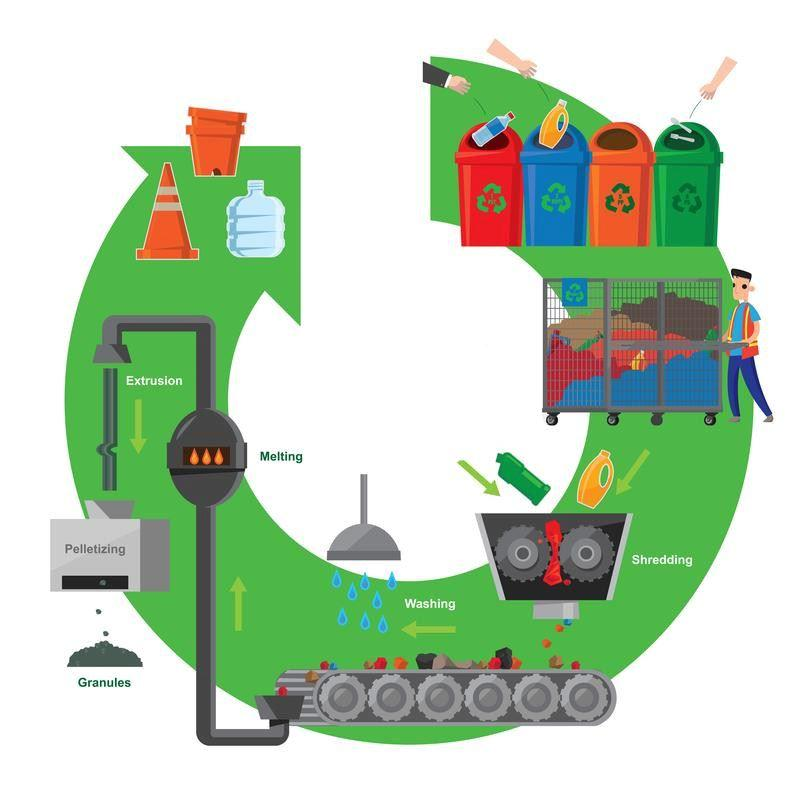
Used pallet stretch film from wineries is collected, processed through recycling channels, and converted back into new stretch film products.
The significance of this project goes beyond regional recycling.
It demonstrates what a successful PCR supply chain looks like:
- A clearly defined end-use application.
- Consistent collection of used film.
- Efficient recycling and reprocessing.
- Reliable production of recycled resin.
- Reincorporation into new packaging products.
Without stable collection systems, PCR supply becomes inconsistent.
Without stable PCR supply, film manufacturing becomes unpredictable.
Without consistent film performance, customers hesitate to switch from conventional products.
This is why PCR stretch film is not only a manufacturing challenge but also a supply-chain management challenge.
Why Is PCR Stretch Film More Difficult Than Conventional Stretch Film?
Performance Variability Increases
Traditional stretch film relies on carefully balanced combinations of LLDPE, mLLDPE, and related materials to deliver:
- Stretchability
- Puncture resistance
- Cling performance
- Elastic recovery
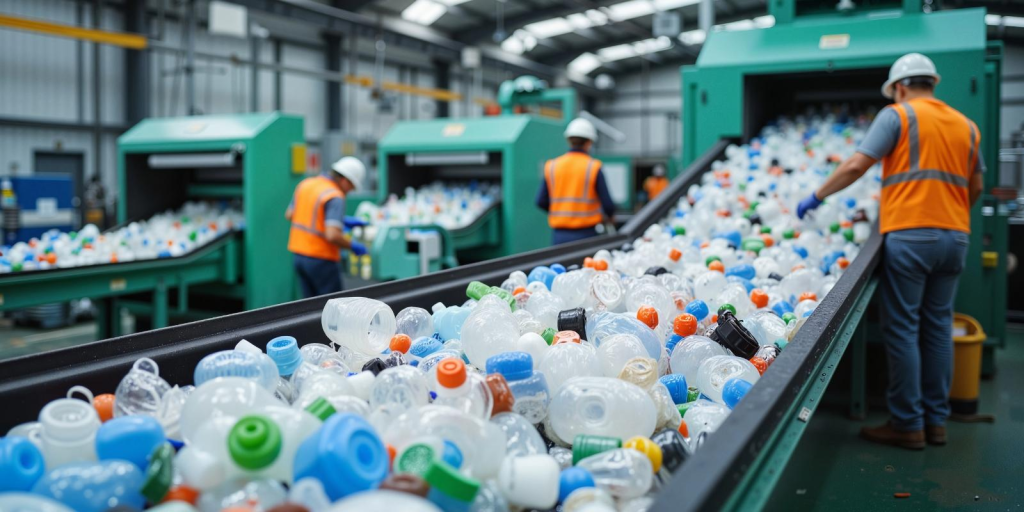
When PCR is introduced, variability increases significantly due to differences in molecular weight distribution, contamination levels, gels, and residual impurities.
Customers typically notice practical issues rather than laboratory measurements, including:
- Film breaks during pre-stretching
- Punctures around sharp pallet corners
- Reduced recovery force after wrapping
- Loose pallet loads during transportation
- Inconsistent performance between rolls
For this reason, PCR content percentage alone should never be used as the primary evaluation metric.
Load retention, puncture resistance, thickness consistency, and batch stability are equally important.
Downgauging Becomes More Challenging
Thinner stretch films place greater demands on both materials and processing technology.
As film thickness decreases, defects become more visible and more impactful. Gels, contamination, thickness variation, and processing instability can quickly affect product performance.
This is why products such as Amcor’s thin-gauge PCR stretch film deserve industry attention.
The future of sustainable packaging is not simply about adding recycled content. It is about achieving thinner, lighter films without sacrificing performance.
To successfully produce downgauged PCR films, manufacturers must carefully control:
- PCR feedstock quality
- Filtration efficiency
- Pelletizing quality
- Formulation design
- Extrusion process stability
- Stretch, puncture, cling, and weight consistency
Machine Stretch Film Requires Even Higher Standards
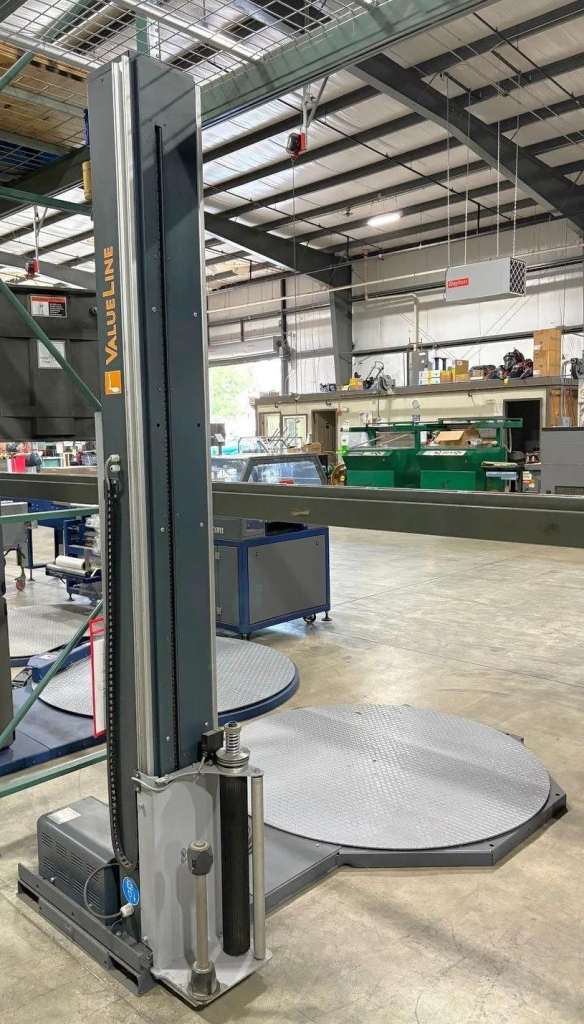
Machine-applied stretch film operates under demanding conditions, including:
- High pre-stretch ratios
- Tension control systems
- Rotary table or rotary arm wrapping
- Different pallet shapes and weights
- Automated warehouse operations
Equipment manufacturers such as Robopac and Lantech continue to emphasize pre-stretch optimization, load containment, automation compatibility, and operational efficiency.
As PCR stretch film enters automated packaging environments, customers increasingly evaluate:
- Performance under high pre-stretch conditions
- Film break frequency
- Tail management and film attachment
- Load containment consistency
- Compatibility with conveyors, AMRs, and warehouse automation systems
For these users, sustainability alone is not enough. Performance must be measurable and repeatable.
How Regulations Are Changing Customer Requirements
The EU Packaging and Packaging Waste Regulation (PPWR) officially entered into force and will become broadly applicable from August 2026.
At the same time, Extended Producer Responsibility (EPR) programs continue to expand across multiple U.S. states and other global markets.
These regulatory developments are accelerating demand for:
- Recyclable packaging design
- Recycled-content verification
- Material traceability
- Packaging reduction initiatives
- Sustainability reporting
As a result, future customer inquiries are likely to include questions such as:
- What is the certified PCR content?
- Is the material designed for recyclability?
- Can you provide compliance documentation?
- Is the PCR content traceable?
- Does the product support ESG goals?
- How does it impact transportation efficiency and packaging waste reduction?
These trends affect not only stretch film but also:
- Agricultural film
- Silage film
- Cotton wrap film
- Shrink film
- Stretch hood film
- Protective packaging film
Each product category will face different sustainability requirements, but the direction is clear.
Environmental compliance is becoming a purchasing requirement rather than a marketing advantage.
What Questions Should Buyers Ask When Evaluating PCR Stretch Film?
Instead of focusing solely on PCR percentage, buyers should evaluate the complete performance profile.
Key questions include:
- What type of PCR material is used—post-industrial, commercial, or household-sourced?
- Is the recycled content independently certified?
- Is the film designed for hand application, machine application, or specific pre-stretch systems?
- What pallet weight, load profile, and transportation conditions are expected?
- Are stretch, puncture, cling, and thickness performance data available?
- Does the destination market have PPWR, EPR, or customer-specific sustainability requirements?
- Is the primary objective sustainability, cost reduction, transportation safety, or all three?
These questions help prevent a common mistake: increasing PCR content while unintentionally reducing packaging performance and increasing overall logistics costs.
Key Takeaways for Film Manufacturers
The PCR stretch film market will continue to grow, but it is unlikely to become a simple low-cost commodity segment.
Manufacturers that succeed in this market will need four critical capabilities:
1. Material Expertise
Understanding the strengths and limitations of PCR, PIR, rLLDPE, LDPE, mLLDPE, and other resin systems across different film applications.
2. Formulation and Processing Expertise
Maintaining stretchability, puncture resistance, cling, transparency, and roll stability despite feedstock variability.
3. Testing and Compliance Capability
Providing documented evidence for thickness, weight, stretch performance, puncture resistance, and regulatory compliance.
4. Application Knowledge
Connecting film performance directly to pallet stability, packaging equipment, transportation conditions, and warehouse operations.
The global stretch film industry is entering a phase where materials, recycling systems, machinery, and regulations are becoming increasingly interconnected.
Companies that can consistently deliver both sustainability and performance will be best positioned to earn the trust of international buyers and brand owners in the years ahead.