The e-commerce packaging landscape is undergoing a systemic shift. According to the 2025 Amazon Sustainability Report and subsequent analysis by Packaging Dive, Amazon achieved a dramatic reduction in North American single-use plastic delivery packaging. The proportion of shipments containing single-use plastic delivery packaging in North America plunged from 65% in 2023 to 37% in 2024, and reached 27% in 2025.
However, a closer look at the global numbers reveals a far more nuanced reality for global supply chains: flexible packaging formats still accounted for 51% of Amazon’s global delivery packaging in 2025.
For manufacturers and suppliers of PE film, top-cover films, shrink films, logistics packaging films, and biodegradable stretch wraps, this report offers a vital strategic lesson: Do not confuse regional plastic reduction with the demise of flexible packaging.
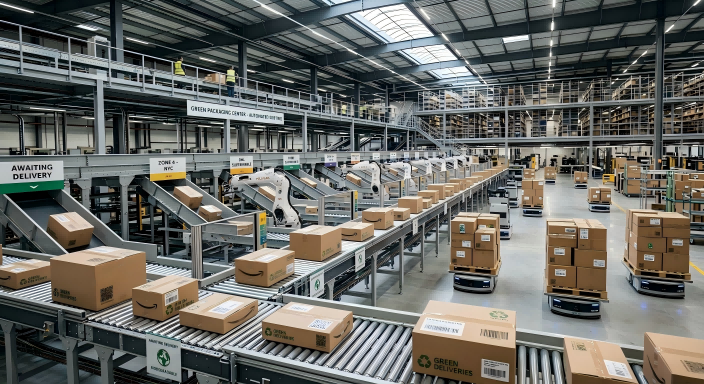
Image Alt Text: Amazon e-commerce packaging warehouse featuring flexible packaging and sustainable logistics materials.
1. Dissecting the Metrics: Proportion, Tonnage, and Format Breakdown
To make informed R&D and supply chain investments, converters and packaging suppliers must distinguish between delivery packaging formats, material compositions, and regional tonnage metrics.
| Metric Category | 2023 Data | 2024 Data | 2025 Data | Key Supply Chain Takeaway |
| North America Outbound Shipments with Single-Use Plastic Delivery Packaging | 65% | 37% | 27% | Rapid transition to paper mailers and automated paper-bagging systems. |
| Global Outbound Shipments with Single-Use Plastic Delivery Packaging | — | 26% | 19% | Global plastic adoption is significantly lower due to diverse regional infrastructures. |
| Global Single-Use Plastic Delivery Packaging Tonnage | — | 74,137 metric tons | 74,073 metric tons | Total volume decreased by less than 0.1% despite sharp proportional drops. |
| North America Plastic Tonnage | — | 68,679 metric tons | 68,196 metric tons | Modest 1% tonnage reduction due to overall order volume dynamics. |
| Europe Plastic Tonnage | — | 894 metric tons | 1,199 metric tons | 34% increase, driven by regional fulfillment footprint expansions. |
| Rest of World Plastic Tonnage | — | 4,564 metric tons | 4,678 metric tons | 2% increase as market operations scale up. |
Why Did Global Plastic Tonnage Remain Flat While Percentages Dropped?
Amazon reported that its global single-use plastic delivery packaging tonnage decreased from 74,137 metric tons in 2024 to 74,073 metric tons in 2025—a reduction of just 64 metric tons.
This discrepancy between proportional delivery metrics and absolute tonnage highlights key operational realities:
- Order Growth & Parcel Mix: A rapid expansion in total order volume can keep absolute material consumption flat, even as the percentage of plastic-containing parcels drops.
- Regional Infrastructure Differences: While 52% of Amazon’s North American fulfillment centers shipped zero plastic delivery packaging in 2025, Europe and emerging markets face different recycling streams, automated bagger capabilities, and supplier landscapes.
- Format Substitution vs. Material Weight: Transitioning to padded paper mailers reduces plastic counts, but alternative paper solutions often require heavier basis weights to maintain tear resistance.
2. Flexible Packaging Holds 51% Global Share: Formats vs. Materials
According to Packaging Dive’s breakdown of Amazon’s global shipping formats, flexible packaging accounted for 51% of all deliveries in 2025, followed by corrugated boxes at 38%, and Ships in Own Container (SIOC) at 11%.
Image Alt Text: Eco-friendly flexible mailers and protective films used in modern e-commerce delivery.
Flexible Packaging Is Not Solely Plastic
It is critical to avoid conflating “flexible packaging” with “plastic bags.” Amazon’s 51% flexible packaging share includes:
- Lightweight Flexible Paper Mailers: Recyclable in curbside paper streams.
- On-Demand Right-Sized Paper Bags: Produced by automated packing machinery.
- Mono-Material Plastic Poly Mailers: Used where water resistance and high-speed automated sealing are mandatory.
Flexible packaging remains dominant because it offers unbeatable volume efficiency, reduced tare weight, high packing line speeds, and lower transportation carbon intensity compared to rigid boxes.
3. Amazon’s Core Packaging Strategy: Four Strategic Pillars
Amazon outlines its continuous packaging evolution through four distinct operational directions:
Pillar 1: Avoid
- Strategy: Ships in Own Container (SIOC) / No Added Packaging
- Key Metric: Reached 11% of global outbound shipments in 2025.
- Implementation: Partnering with OEMs to certify vendor packaging to withstand transit without extra shipping boxes or bags.
Pillar 2: Optimize
- Strategy: AI & Machine Learning Right-Sizing
- Key Metric: Avoided 288 million plastic bags in North America in 2025.
- Implementation: Deploying computer vision to select minimal box sizes and automating real-time custom-fit bagging in fulfillment centers.
Pillar 3: Convert
- Strategy: Material Substitution & Single-Use Plastic Reduction
- Key Metric: 52% of North American fulfillment centers issued zero plastic delivery packaging in 2025.
- Implementation: Switching from plastic mailers to curbside-recyclable paper alternatives and lightweight flexible structures.
Pillar 4: Innovate
- Strategy: Advanced Sorting & Circularity Infrastructure
- Key Metric: Expansion of post-consumer recycled (PCR) content standards globally.
- Implementation: Investing in optical sorting technologies, mono-material PE films, and mechanical recycling recovery loops for difficult-to-recycle films.
4. Strategic Implications for Film Manufacturers & Converting Suppliers
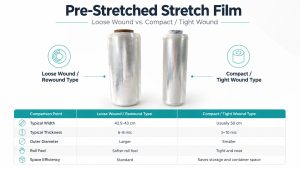
For B2B suppliers producing Polyethylene (PE) logistics films, shrink films, pallet wrap, top-cover films, and stretch films, Amazon’s data proves that material demand is not disappearing—it is shifting toward engineering excellence.
Direct-to-Consumer Packaging (Poly Mailers & Bubble Bags)
- High Substitution Pressure: Poly mailers face heavy pressure from paper alternatives in North America and Europe.
- The Path Forward: Focus on ultra-thinning, high structural integrity, 100% mono-material PE constructions for store drop-off recycling, high post-consumer recycled (PCR) content integration, and tamper-evident seals engineered for automated machine lines.
Warehouse & B2B Transit Packaging (Stretch Film, Shrink Wrap & Pallet Covers)
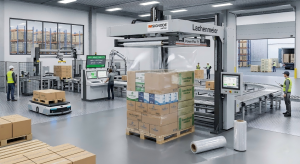
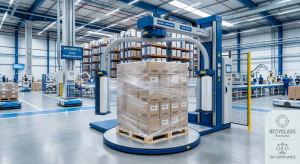
- Stable Core Demand: Secondary and tertiary packaging (pallet wrapping, protective top covers, and bundle shrink films) are rarely visible to the end consumer but are vital for supply chain stability.
- The Path Forward:
- Transition from standard films to high-performance, nanolayered stretch films that cut unit load weight while maintaining puncture resistance.
- Offer high-percentage PCR stretch films with certified batch-traceability data.
- For biodegradable stretch wrap suppliers: Provide verifiable third-party testing proving performance in specific industrial composting or degradation environments without leaving microplastics.
5. Summary Matrix for Supply Chain Decision-Makers
Before framing your product strategy around corporate sustainability disclosures, ensure your organization evaluates metrics through an objective operational lens:
Data Disclosure Note: All tonnage figures, percentage reductions, and operational claims are self-reported corporate disclosures by Amazon. Independent third-party assurance statements in Amazon’s report primarily focus on Scope 1, 2, and 3 carbon emissions and renewable energy metrics rather than the full scope of packaging tonnage. Industry professionals should treat these trends as directional benchmarks for R&D prioritization rather than absolute market guarantees.
To capitalize on these global e-commerce packaging trends, film suppliers should audit their product portfolios against three critical operational questions:
- Total Material Efficiency: Can your flexible film reduce total order package weight and damage rates compared to paper alternatives?
- Machinability Data: Does your film deliver consistent seal integrity and zero downtime on ultra-high-speed automated packaging machinery?
- End-of-Life Clarity: Is your material backed by transparent, regionally accurate recycling data rather than vague “eco-friendly” claims?