A B2B Guide to Balancing Regulatory Compliance, Cost Reduction, and Load Stability in Industrial Transport Packaging
Quick Overview for Supply Chain Leaders
- The Challenge: The EU’s Packaging and Packaging Waste Regulation (PPWR) mandates strict reductions in packaging waste, 2030 recyclability, and mandatory PCR (Post-Consumer Recycled) content.
- The Impact: Importers and logistics hubs face heavy plastic taxes and compliance audits if their pallet wrapping doesn’t adapt.
- The Solution: Transitioning to ultra-thin, nano-layer co-extruded stretch films and high-ratio PCR stretch wraps solves compliance without sacrificing load retention.
What is the EU PPWR and Why Does It Matter for Transport Packaging?
The European Commission’s Packaging and Packaging Waste Regulation (PPWR) marks the most aggressive legislative shift in the global packaging industry. Unlike previous directives, the PPWR is a regulation, meaning it applies legally and uniformly across all EU member states, directly impacting anyone exporting goods into or distributing within Europe.
For logistics managers, warehouse procurement specialists, and supply chain directors, tertiary packaging (specifically stretch film and pallet wrap) is now under the regulatory microscope.
The European Union has set clear milestones:
- Packaging Waste Reduction: A mandatory reduction of packaging waste per capita (5% by 2030, rising to 15% by 2040).
- Design for Recycling (D4R): By January 1, 2030, all plastic packaging must be 100% recyclable.
- Mandatory Recycled Content: Transitioning away from virgin plastics by enforcing minimum Post-Consumer Recycled (PCR) plastic targets in film manufacturing by 2030.
The Core Dilemma: Green Compliance vs. Pallet Load Stability
As a procurement professional, your primary KPI for stretch film has always been load containment and transit safety. Shifting to “sustainable” options historically meant compromising on film strength, leading to punctured wraps, collapsed pallets, and costly product damage during sea or road freight.
Under PPWR, you can no longer just add more layers of cheap, heavy virgin film to secure a pallet. Doing so triggers:
- Higher Plastic Taxes: Countries like Spain, the UK, and Germany heavily penalize non-recycled or excessive plastic use.
- Extended Producer Responsibility (EPR) Fees: Fees calculated directly on the total weight of plastic introduced to the market.
The Question is: How do you reduce plastic weight and integrate recycled materials without causing your transit pallets to fail?
How Next-Gen Stretch Film Technology Solves the PPWR Problem?
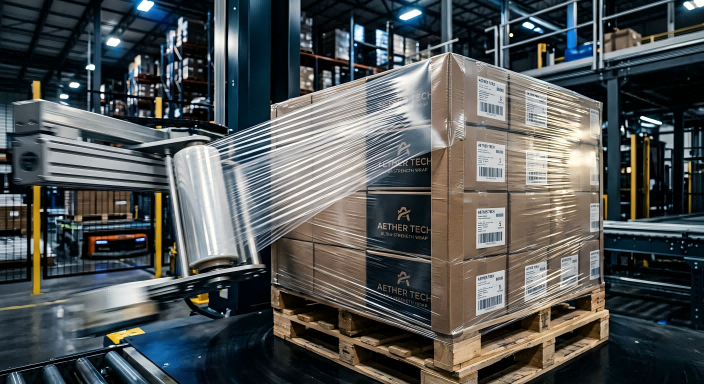
Thanks to breakthroughs in polymer science and manufacturing, you do not have to choose between a green supply chain and a secure one. Advanced stretch film engineering provides a dual solution:
1. Downgauging via Nano-Layer Co-Extrusion (Material Reduction)
Traditional stretch films rely on 3 or 5 layers. Next-generation industrial wrap utilizes nano-layer technology (up to 33 or 55 micro-layers).
- The Benefit: By ultra-layering the polymers, a 12-micron nano-film can deliver higher puncture resistance and load retention than a standard 20-micron conventional film.
- The PPWR Alignment: This immediate 30% to 40% reduction in plastic weight directly slashes your EPR fees and helps meet the EU’s waste reduction targets instantly.
2. High-Performance PCR (Post-Consumer Recycled) Integration
Historically, adding recycled content made stretch film brittle and prone to tearing on high-speed automatic wrapping machines.
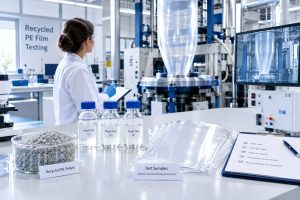
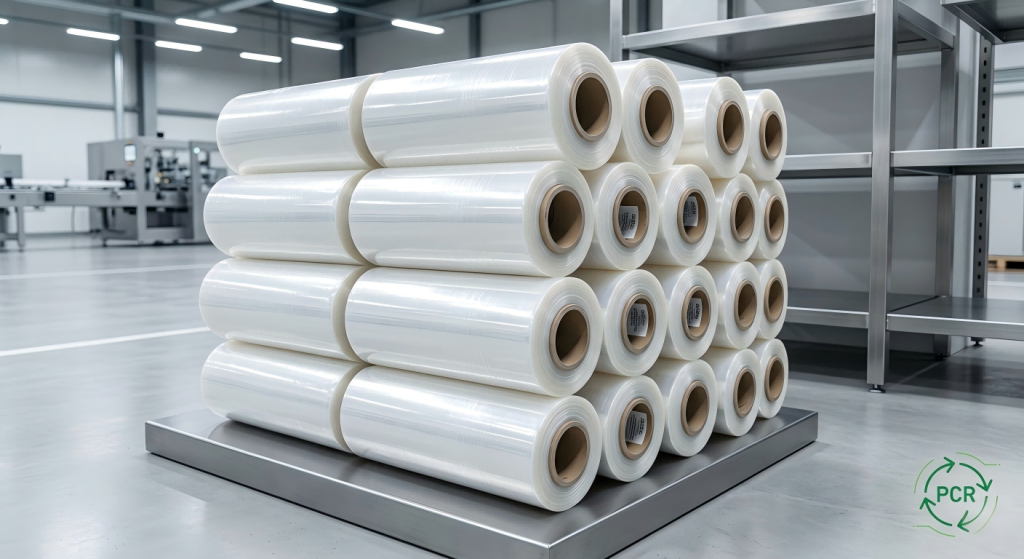
- The Breakthrough: Today’s premium 30% to 50% PCR stretch films utilize highly filtered, top-tier recycled resins combined with advanced virgin linear low-density polyethylene (LLDPE).
- The PPWR Alignment: They maintain up to 250%–300% pre-stretch ratios on automatic wrappers while fulfilling the EU’s upcoming mandatory recycled content thresholds ahead of schedule.
Checklist: How to Audit Your Pallet Wrapping for EU Compliance?
If you are currently shipping goods to Europe, ask your stretch film manufacturer or supplier the following compliance-critical questions:
- [ ] Is the film 100% Recyclable? Ensure it is pure LLDPE (Mono-material) without multi-material laminates that ruin recycling streams.
- [ ] Can we run a trial with a downgraded nano-film? Test if you can drop from 20 microns to 12 or 15 microns without losing holding force.
- [ ] Do you provide certified PCR film? Ensure the recycled content comes with verifiable certifications (like GRS or RecyClass) to present during EU customs or environmental audits.
Conclusion: Turn Regulation Into a Competitive Advantage
The European Union’s packaging overhaul is not a temporary trend—it is a permanent rewrite of global logistics rules. Companies that wait until 2030 to adapt face massive financial penalties and disruption in their European distribution networks.
By transitioning to ultra-thin nano-films and certified PCR pallet wraps today, you don’t just avoid plastic taxes; you position your brand as an eco-conscious leader, satisfying both the CFO and the Sustainability Director.
Looking for PPWR-Compliant, High-Retention Stretch Film?
We specialize in manufacturing certified PCR recycled wrap and high-strength nano-layer stretch films designed to pass European compliance while cutting your packaging costs.
[Contact our technical team today for a free custom downgauging audit and sample roll.]